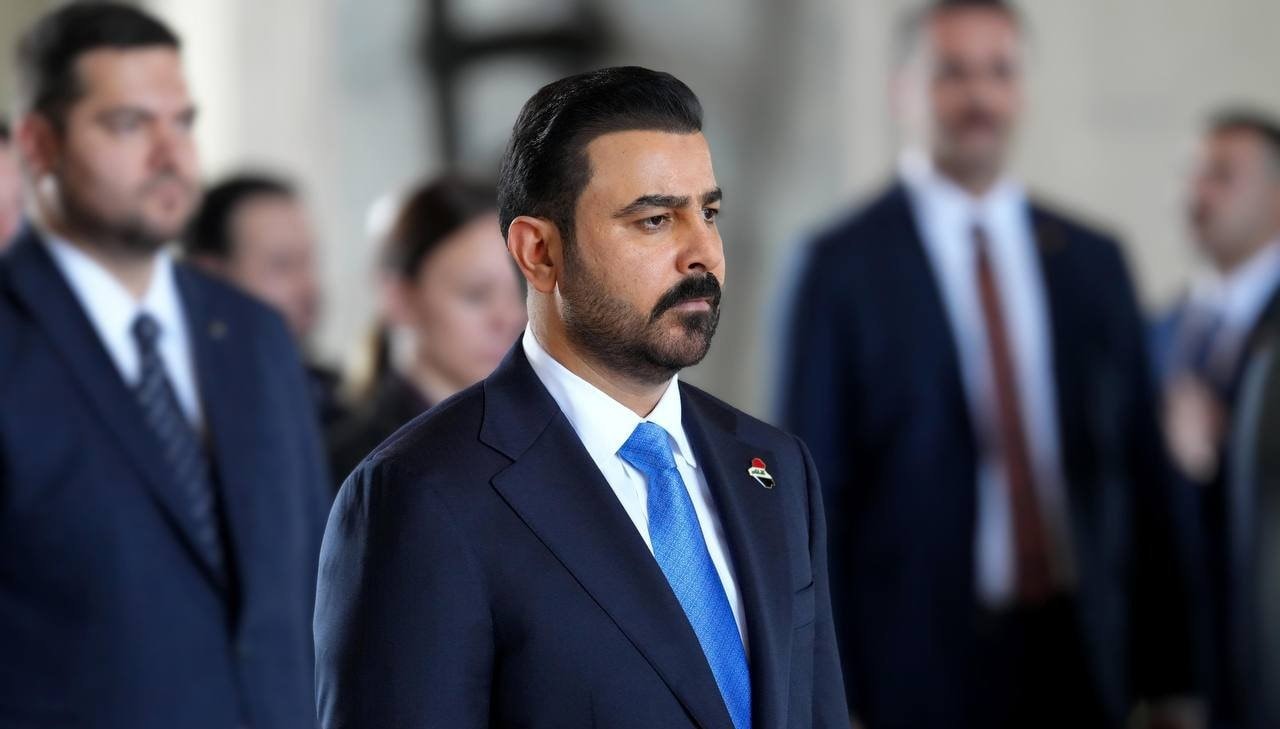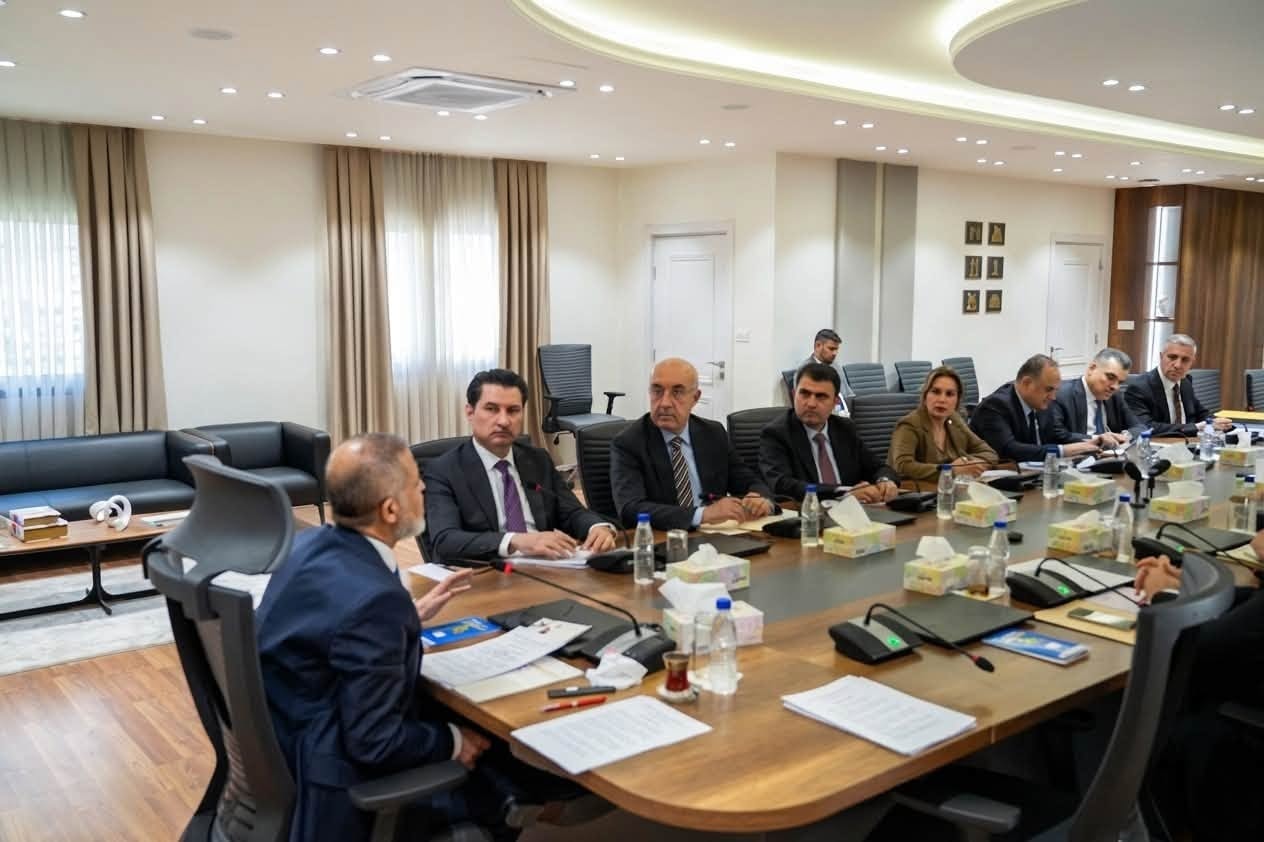
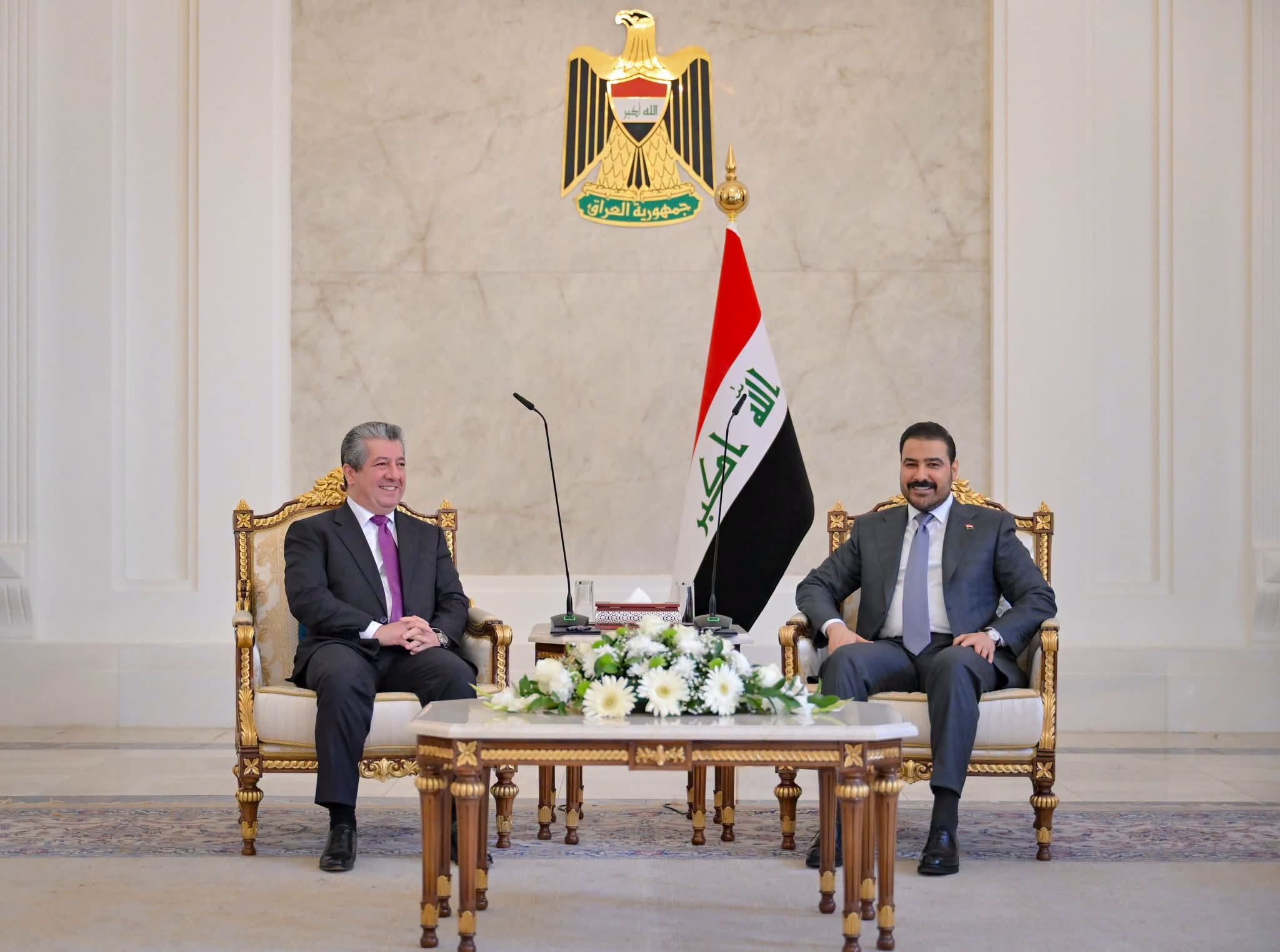
Today, Monday, November 9, Masrour Barzani, prime minister of the Kurdistan Regional Government, met in Baghdad with Ali Zaidi, Iraq’s federal prime minister.
Both sides strongly condemned last night’s terrorist attack on the Kormor gas field and agreed on the need to end attacks against the Kurdistan Region’s economic and energy infrastructure.
The federal prime minister referred to plans to increase oil production in the coming years, reaching 7 million barrels per day by 2030 and 10 million barrels per day by 2032, including production from the Kurdistan Region’s fields, which is expected to reach nearly 1 million barrels per day. He also reiterated that this increase would have a positive impact on Iraq’s development and economy.
In another part of the talks, views were exchanged on the constitutional rights and financial entitlements of the Kurdistan Region.
The prime minister of the Kurdistan Regional Government stressed the importance of ensuring the Kurdistan Region’s share of the 2027 federal budget in a fair manner, based on the Constitution, respect for the federal system, and recognition of the Kurdistan Region’s constitutional status.
The following issues were discussed at the meeting:
Oil-field management: The sides discussed mechanisms for managing and regulating oil fields on the basis of the Constitution.
Oil and non-oil revenues: They discussed mechanisms for regulating and managing oil and non-oil revenues in accordance with coordination between the finance ministries of the federal government and the Kurdistan Region.
Salaries of Kurdistan Region employees: Both sides stressed the need to continue paying the salaries of Kurdistan Region employees alongside those of Iraq’s federal employees.
2027 federal budget: The Kurdistan Region’s share and the mechanisms for allocating it must be based on the Constitution and designed to serve the interests of all of Iraq’s communities.
Oil and Gas Law: The importance of expediting the enactment of an Oil and Gas Law was stressed, in a way that would help resolve issues related to oil production and exports and regulate the management of oil resources.
Both sides stressed the importance of continuing coordination, joint cooperation, dialogue, and mutual understanding as a basis for resolving outstanding issues in a manner that serves the interests of all Iraqis.