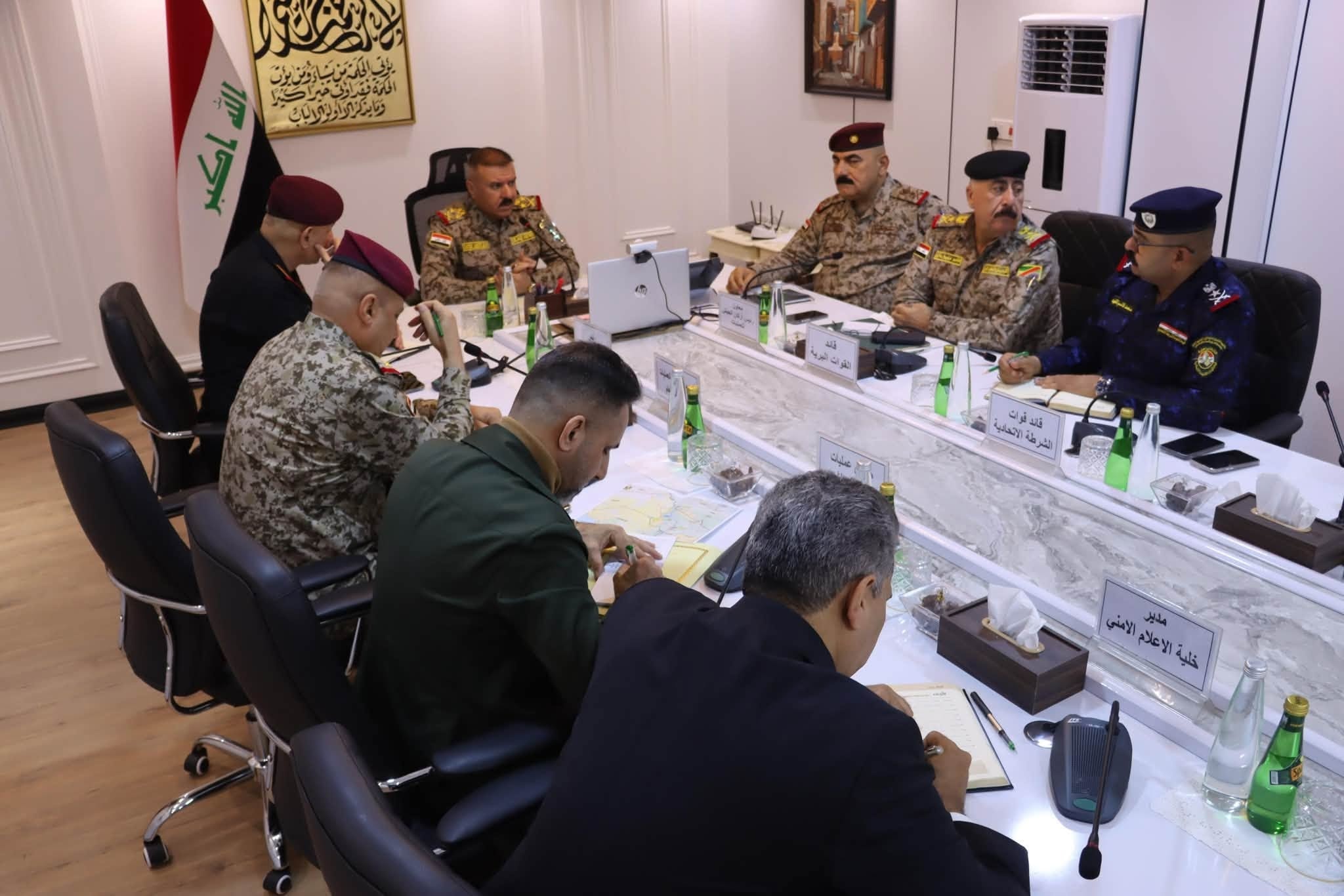
According to an official letter from the office of Iraq’s commander-in-chief of the armed forces, numbered (1257) and signed by First Lieutenant General Abdul Amir al-Shammari, approval has been granted to redeploy forces in the Jurf al-Nasr area and its surrounding sectors, with responsibilities divided as follows:
- The 38th Brigade of the 10th Division, under the Ministry of Defense, will be deployed from "Satiyah Yahussein" to the Fadhiliyah intersection within the Anbar Operations Command’s area.
- The 17th Brigade of the Federal Police, under the Ministry of Interior, will take control of Jurf al-Nasr district from the Euphrates eastward to the Musayyib–Fadhiliyah road in the west.
- The 72nd and 79th Brigades of the Popular Mobilization Forces will be deployed from the Musayyib–Fadhiliyah road to the boundaries of the Karbala Operations Command.
- An Energy Police battalion will be tasked with protecting oil transmission lines.
- A Babylon Police checkpoint will be opened at the Fadhiliyah intersection toward Musayyib, along with an Anbar Police checkpoint toward Amiriya al-Fallujah.
- The main road—Musayyib–Bahbahani–Fadhiliyah intersection–Amiriya al-Fallujah—will be reopened to traffic.
- A Counter-Terrorism Service battalion at the Hamiya camp will be placed on standby as the commander-in-chief’s reserve force for emergencies.
The government’s new decision follows a high-level meeting of security leaders in Baghdad, held amid recent tensions and disputes between the government of Ali Faleh al-Zeidi and Hezbollah Brigades over the presence of their armed elements in the area.
Earlier, Iraq’s prime minister had authorized the Hezbollah Brigades, amid investigations related to oil smuggling in the area, to vacate it by Friday to allow the entry of official forces. However, the brigades refused to withdraw. Jurf al-Sakhar is a strategic link between the provinces of Baghdad, Anbar and Karbala and has been under the control of the Hezbollah Brigades since 2014.