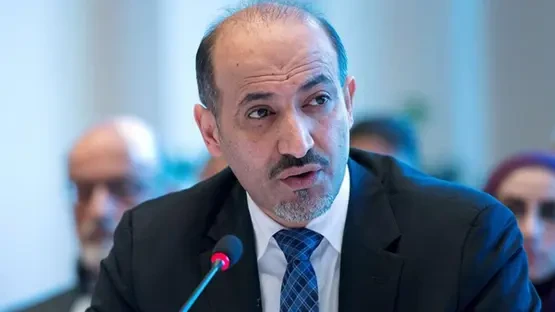
Below is the text of a statement by Ahmad Jarba, head of Syria’s Tomorrow Movement:
For three days, we have been watching an old crisis take on a new form between the federal government in Baghdad and the Kurdistan Regional Government in Erbil. These are successive crises that have continued for 20 years, resurfacing from time to time and quickly subsiding again.
Any disruption to the balance in Baghdad causes Iraq’s balance to falter; the same applies to Erbil, and vice versa. The Constitution is always invoked, while Iraq’s wise men and respected figures—Kurds and Arabs alike—step in, hearts are reconciled, and these disputes pass.
It is no secret that we have strategic ties with Erbil and with the Barzani family, which helped establish the Syrian opposition—the opposition that we represented at one stage. These ties bring together our history, geography, tribal relations, and old and historic alliances, whose history stretches back nearly two centuries. The Baghdad-Erbil crisis is an internal Iraqi crisis, and we strongly hope it will end soon and that the waters will return to their course, contrary to what some people wish for.
But what caught my attention and prompted me to take a stand was the intervention of Syrian activists in this crisis, their siding with beloved Baghdad against beloved Erbil, and their calls to close the Semalka border crossing. This is an appeal that reflects a wretched nationalist hatred. Since it should not be only the defeated who are mocked, my moral duty, before my national duty, is to remind people—if reminding them is of any use.
The Semalka crossing was the only crossing in eastern Syria through which, at least from three major Syrian provinces, everyone who had separated from the fallen regime, every fugitive, every oppressed person, and every sick person who could not reach Damascus and was wanted on the regime’s arrest lists crossed over. For every man or woman fleeing death and the hardships of life, Erbil was the main station for Syrians who chose it as a route or a place to stay.
They did not require a Syrian passport as a condition for entry, even though they knew that the cost of Syrian passports would consume most of what any family possessed, in addition to the difficulty of obtaining one—even if the fees could be afforded.
President Masoud Barzani and the Kurds were a refuge for the frightened, the fleeing, and the displaced. They sheltered every fugitive and came to the aid of every distressed person. Despite their limited capabilities, they turned more than one refugee camp into a home for people from all communities, without any distinction based on ethnicity, religion, or sect. During the period when ISIS seized large parts of Syria and Iraq, the Kurdistan Region opened this humanitarian gateway to protect civilians.
God Almighty says: ﴿Is the reward for good anything other than good?﴾
Is the reward for good to be insolence and denial?!
In conclusion, I hope those who consider themselves activists and write about public affairs will speak about Syrians’ suffering from high prices and the insane rise in the cost of fuel, such as mazut, at a time when winter is knocking at our doors.
And if they consider speaking about people’s livelihood concerns a luxury, then Israel has been carrying out daily aggression and attacks in southern Syria for more than a year and a half—in the provinces of Daraa, Suwayda, and Quneitra—and has come within stone-throwing distance of beloved Damascus. Syria has enough of its own crises; there is no need for us to involve ourselves in the crises of our brothers and neighbors.
Leave Iraq to its people; God willing, it will be fine.
Ahmad Jarba, head of Syria’s Tomorrow Movement