
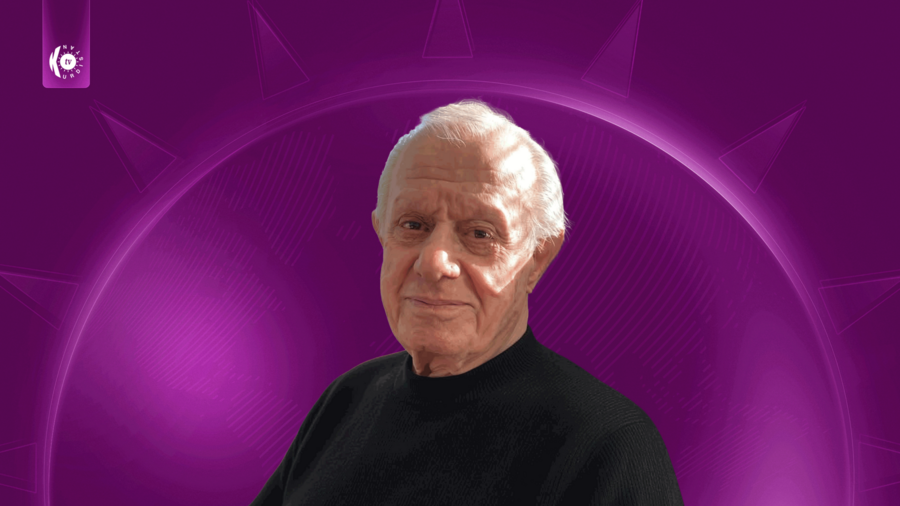
The flute player of the Mawlawi Music Band!
“Both songs were based on poetry by Nuri Washti and were in my own melody!”
He has spent many years living in exile, far from his homeland and birthplace. Exile and displacement have affected him as he has aged, but we must be grateful to the Creator that he is still alive: the unique artist of the Mawlawi Music Band, the first generation.
There was a time when this handsome, stylish, smiling, sweet-tongued artist, Nejati Abda, and the Mawlawi Music Band were shining names in the world of Kurdish vocal art, music, and song in the city of Sulaymaniyah and Kurdistan.
During his artistic life, very little has been written about or interviewed regarding his social and artistic life! It is worthy of appreciation that an interview was conducted with him by the “Kurdish YouTubers” in 2012, in which he discusses the beginnings of his artistic and social life, and it was published on the social media platform Facebook.
The artist Nejat Abda Amin is known among the public, society, and artistic circles as “Nejati Abda.”
Regarding the name “Abda,” we ask: Has it become a suffix to his name, or is it his father’s name?
To verify that name, I contacted Kaka Delir, the artist’s son, in Sweden, and he indicated:
“As far as I know and as I have heard from my father, when my grandfather was born, it was initially decided that his name would be (Abdulrahman), but they always called him Abda and addressed him by that name. Eventually, this became my grandfather’s official name, he was registered as Abda, and our family became known as Abda.”
The artist Najati Abda was born on (14/10/1936) in the city of Sulaymaniyah. He completed his primary education in Sulaymaniyah and reached the third grade of middle school. However, because he became involved in political activities and joined the (Kurdistan Students’ Union), affiliated with the Kurdistan Democratic Party, he was arrested by the regime of that era. The court sentenced him to (6) months in prison and imposed another punishment, barring him from school for (5) years and stripping him of his right to study. Thus, he was deprived of education and was not allowed to continue his studies at any other school in the city of Sulaymaniyah.
Later, in order to secure a livelihood, the artist turned to the Sulaymaniyah Municipality seeking employment, so that he could find work. He was employed in the Drafting Section of the municipality’s Engineering Department. In this job, too, he was accused of engaging in political activities, was imprisoned several times, and was later released.
All those arrests and imprisonments of the artist Najati Abda became a humorous expression in the city of Sulaymaniyah and a phrase on people’s lips. Whenever someone had escaped from a predicament, they would use that expression and say: “I was saved, like Najati Abda..?! ”
Najati Abda and the establishment of the Mawlawi music band
It is clear to everyone that the Mawlawi music band was established in (1955) through the efforts and dedication of several artists devoted to the art of music, melody, and song, and it was an important turning point for Kurdish music and song at that time. Although these artists had previously worked together artistically, they had not done so under the umbrella of a music band, until (1955), after the artist (Qadir Dilan) returned permanently from Baghdad to the city of Sulaymaniyah and they established the Mawlawi band.
The artist Najati Abda recounts the beginnings of his artistic career as follows:
“I began playing music in the fifties. I taught myself to play the nay and shawm, and every day I would play those instruments alone at home for several hours. I was very fond of playing. After a few years, I heard that there was a young man named (Qadir Dilan) who played the clarinet, and we had some acquaintance with him. I contacted him and said to him: Why don’t you teach me the maqams, and, for the first time in the history of this city, break the taboo against establishing a band so that we may serve Kurdish music?”
In response, he said: “I have been looking for someone like you for a long time to help me in such a sacred endeavor, because I and several other friends also play the oud and violin, and they too have the desire to establish an ensemble. After a while, we held several meetings and began rehearsing. During that period, the late Qadir Dilan, who in his time was a prominent figure in the arts, taught me several maqams, and I was able to master them and gain his approval. After that, with boundless enthusiasm, we participated in Nowruz celebrations and national commemorations. It came to the point that our name spread among the public, and they held us in great honor and respect. After the late Qadir Dilan was expelled from Baghdad’s College of Economics because of his involvement in political work and returned to Sulaymaniyah, he contacted me and the other friends and informed us that he could no longer return to Baghdad. Therefore, we needed to develop the Mawlawi music ensemble. Then we held a meeting with his artist friends, such as the late Bahjat Rashid Saatchi, Hatim Said, as well as Hadi Anbar and Omaid Madhat Mubarak, and with the cooperation of several other personalities who, like him, had a passion for music as though it had been forged in a blacksmith’s furnace” (1).
Prominent artists at the beginning of the establishment of the Mawlawi music ensemble:
(Qadir Dilan: 24/5/1928 – 18/3/1999, violin and clarinet player).
(William Yohanna: 1934 – 14/9/2005, oud and violin player).
(Bahjat Rashid Saatchi: 1927 – 12/7/1998, oud and violin player).
(Hadi Anbar: 1933 – 5/5/2007, oud and violin player).
(Najati Abda: shamsal “ney” player).
(Othman Sabonchi: 1931 – 16/6/1971, oud player and singer).
(Hatem Saeed, known as Hatema Resh: 1936 – 7/1/2011, percussion player – rhythm).
(Abdulrahman Qadri: oud player).
(Sardar Ramzi Fattah: violin player).
(Dr. Omed Medhat Mubarak: 5/6/1939, violin player).
These personalities also assisted and supported the Mawlawi music ensemble, including: (Hama Faraj Maruf, known as Khala Hama Faraj: 1938 – 12/2/2008) (J, D), who was an announcer and presenter of programs; (Omar Majid Khalaf, known as Omar Halmat: 1934 – 14/12/2020), recording and sound engineer, and arranger of the placement of musical instruments and microphones; (Nuri Badawi), who assisted Kak Omar Halmat; and (Kak Nuri Washti: 1935 – 12/5/2001), theatrical affairs (2).
It appears that the teacher, artist, and writer (Bakuri: 5/11/1928 – 2/11/2022) mentioned only the names of those beloved artists, but another source mentions the artist (Hazim Hadad: 1925 Baghdad – 17/5/2012 Amman, oud player) and (Qadir Kurdi: dafzan player), who were assistants and members of the Mawlawi music ensemble (3).
At first, these artists gathered under a music ensemble and intended to name the ensemble (Dilan), but the artist (Qadir Dilan) did not agree to that name and decided to withdraw from that musical group. In this regard, the late Qadir Dilan says: “At first they named the ensemble (Dilan). I did not agree, and I told the members of my ensemble: If you do not change that name, I will leave. Then we made it the Mawlawi ensemble” (4).
It is also noteworthy and worthy of consideration why that ensemble was named after the great Kurdish poet (Mawlawi: 1806 – 1882).
The artist and composer Zhinyar (Najati Abda), in an interview in the supplement of Al-Iraq newspaper, which was published in Kurdish in Baghdad, says: “Several times we met to name the band. One day, Kak Hama Faraj Maruf came and said, ‘I have found a name I like very much: the Mawlawi Music Band.’ It is close to the spirit of the great Mawlawi, because his poems are very fresh and beautiful and their verses are full of music.’ The decision was then made” (5).
The Mawlawi Music Band had still not obtained official permission for the band, and was performing its artistic work and concerts without permission in the city of Sulaymaniyah. In addition, it had no official venue or headquarters where it could freely hold rehearsals and carry out its artistic activities; it only had homes, such as the homes of the two artists Qadir Dilan and William Yohanna. Sometimes they rehearsed in a room at one of the schools in the city of Sulaymaniyah.
When and how did the Mawlawi Music Band obtain official permission?
Master and artist Bakuri has written: “In the year (1957), the Sulaymaniyah Fine Arts Society was established. Kak Najati Abda, William Yohanna, and Qadir Dilan submitted an application to obtain permission. On (19/6/1957), they were officially granted permission to work. The band, with all its members, was then established within the society and joined it” (6).
Regarding obtaining official permission for the Mawlawi Music Band, the artist Najati Abda tells us:
“We submitted an official application for the establishment of the band, so that it would be allowed to carry out its work without anyone being able to obstruct it. Our application was sent to Baghdad through the governor of Sulaymaniyah at that time. At that time, Said Qazzaz (1904 Sulaymaniyah – 20/9/1959) was Minister of the Interior. When our application came to his attention, he immediately said without hesitation: ‘Very good. So that those young men of Sulaymaniyah do not become too occupied with political work and activities and instead occupy themselves with music, grant them permission to establish that band.’ That minister was unaware that our fundamental aim was to advance political work, but under the cover of art.”
“After this, we officially established the Mawlawi Music Band and began presenting musical and singing concerts. The public also gave strong support to our work, especially the people of Sulaymaniyah. This caused the band to develop further, advance further, and spread the enjoyment of art” (7).
The artist Najati Abda and his artist friends within the Mawlawi Music Band continued their artistic work and activities and gathered a large audience around them. They also brought together a number of artists and talented singers from inside and outside the city of Sulaymaniyah, delighting the public with their concerts and making the lofty aims of art more sacred and elevated. The artists who participated with the Mawlawi Music Band in concerts and commemorations included:
(Rashol: 1912 – 14/7/1974), (Hama Bakr: 1926 – 14/2/1999), (Shamal Saib: 1931 – 7/11/1986), (Hassan Zirek: 29/11/1921 – 26/6/1972), (Hama Saleh Dilan: 1927 – 28/10/1990), (Bakuri: 1928 – 2/11/2022), (Sewa: 1891 – 9/12/1963), (Tayer Tawfiq: 1922 – 20/10/1987), (Khalili Sediqi: 1930 – 1970), (Foad Ahmad: 1932 – 17/8/2004), (Rasul Gardi: 1922 – 17/10/1994), (Ibrahim Muhammad, known as Ibrahimi Khayat: 1931 – 3/5/2005), (Qadri Haji Hussein: 1921 – 6/9/1984), (Omar Reza: 1942 – 7/8/2021), (Rafiq Chalaq: 1923 – 30/11/1973), (Jamal Jalal: 1942 – 21/8/2016), and (Faraji Haji Rashid: 1922 – 1981).
National and ethnic celebrations and occasions of the Mawlawi Music Troupe
Celebrations and artistic activities in which the flute, sensibility, and fingers of the artist Najati Abdi participated:
The celebrations of the schools, the Goyzha Boys' School, on 4/12/1955.
The Sulaymaniyah secondary school celebration on the occasion of opening an industrial exhibition on 20/8/1956. At that celebration, the artists Hassan Zirek and Ahmadi Sheikhali: 1929 – 6/12/2005) and several other artists from the city of Sulaymaniyah participated. A photograph of that celebration was taken by the capable photographer Rafiq Mahmoud Muhammad, known as Rafiqi the Photographer: 1932 – 8/9/2020), and today it has become a valuable archive for the artistic treasury of music and song.
Regarding that celebration, the artist Qadir Dilan says in an interview:
“The finest celebrations of Hassan Zirek were in 1956 (an industrial exhibition) at Sulaymaniyah Secondary School. On that occasion, we staged a play behind the Sulaymaniyah Secondary School building, for which they brought a temporary television to Sulaymaniyah for the area where the exhibition was held. Apart from the artists of the Mawlawi Troupe, these artists were also with us, such as: Shamal Saib, Ibrahim Muhammad, Qadri Haji Hussein, Hama Bakr, Karim Kaban, and Hassan Zirek. There, Hassan Zirek sang that song for the first time in his life; after one week, it was on the lips of every Kurd in Sulaymaniyah. That song was called ‘Ay Way Zara’; that song came to everyone’s lips” (8).
At the end of every month, they held a celebration for the guests of the Employees’ Club at the Employees’ Club.
A charity concert to collect aid for the victims of the Pênjwin earthquake disaster; organizing concerts in hospitals to raise the patients’ spirits and morale.
Likewise, for the tragic disaster that occurred on 18/10/1957, the day the flood struck the city of Sulaymaniyah, the Mawlawi Music Ensemble, driven by a profound national feeling and a national duty, made art a bond among the cities and towns. They organized the theatrical performance Razeel and the Flood, written and prepared by the artist Qadir Dilan, along with songs and music, for the purpose of collecting aid, with the cooperation of the singing artists Hama Salih Dilan, Rashol, and Osman Sabonchi, in the city of Sulaymaniyah. Later, they went to the city of Erbil on 13/11/1957 and, with the cooperation of the artists Rasul Gardi, Mishko (1928 – 15/5/1989), and Haidarbagaq (1915 – 4/12/1979), organized concerts for three days. Then, on 15/11/1957, the Mawlawi Music Ensemble set out for the city of Haji Qadir Koyi, and in Koya, in addition to the artists from Sulaymaniyah, the two artists Siwa and Bakuri also cooperated in presenting the concert. This devoted and compassionate ensemble allocated the income they earned from the concerts to the victims of the flood in the city of Sulaymaniyah. Thus, they were always striving to collect money to bring happiness to the poor, disaster victims, and underprivileged students. This fundraising was not for their own pockets or interests; that beautiful, overflowing quality of humanity was characteristic of all the members of the Mawlawi Music Ensemble, and the artist Qadir Dilan played the leading role.
For that era and time, the Mawlawi Music Ensemble played a good role in developing and advancing the art of music and song, and they continued their artistic activities, presenting several more concerts in the cities of Sulaymaniyah and Halabja.
The Employees’ Club concert held on the occasion of the return of the late Barzani (Barzani the Immortal: 1903 – 1/3/1979) in 1958 and his visit to the city of Sulaymaniyah.
The concert that the Mawlawi Music Ensemble held at the Sulaymaniyah Employees’ Club on the occasion of the return of Barzani the Immortal is recalled by the musician artist Najat Abda as follows:
“I myself was one of those artists who proudly welcomed the immortal leader (Mustafa Barzani) and his comrades after his return from Russia to Iraq. I remember that we held a grand concert at the Sulaymaniyah Employees’ Club, and Barzani the Immortal was very pleased that Kurdish youths could present all those beautiful and revolutionary songs for the sake of their land and nation” (9).
Holding a concert on the occasion of Workers’ Day on 1/5/1959, with the cooperation of the two mellifluous artists Hama Salih Dilan and Qadri Haji Hussein.
Holding a concert at the Halabja Employees’ Club in 1959. The theatrical artist Raouf Yahya (1924 – 1987), together with several artists, performed the play The Merchant of Venice in Halabja. After the theatrical performance ended, the artists of the Mawlawi Music Ensemble held a concert for the people of Halabja that evening.
On the occasion of opening the Ministry of Guidance branch in the city of Sulaymaniyah on (25/12/1960).
In (1961), they carried out numerous artistic works and activities inside and outside Sulaymaniyah, including recording several songs at the home of the artist (Hatama Rash) in the Qazzazakan neighborhood, at the request of the leadership of the September Revolution. The songs were: “Salute to the Kurdish Democratic Party,” “Dear Mother, Please, Enough Crying”; both songs were poems by (Nuri Washti: 1935 – 2001) and set to music by the artist (Najati Abda), as well as the songs “We Are Peshmerga” and “The Festival Is the Festival of Kurdistan, the Festival of Newroz.”
In the same year (1961), they organized a concert at the Kurdish Fine Arts Society in the city of Koy Sanjaq, with the collaboration of the artist (Sewa).
On (23/11/1961), the Mawlawi Music Ensemble organized a concert on the occasion of the opening of the (Darbandikhan Dam), which (Abdulkarim Qasim: 1914 – 9/2/1963) attended. (15 boys and 15 girls), lively and cheerful, sang the song “Abdulkarim the Hero” in chorus. The artists who participated in that concert were: (Hanna Batros, Simko Aziz, Najati Abda, Hatama Rash, Hadi Anbar, Qadir Kurdi, Qadir Dilan, Rafiq Chalaq, Hazim Haddad and William Yohanna).
On (7/4/1963), on the occasion of Newroz, they organized a concert in (Khuld) Hall in the city of Baghdad, with the collaboration of singer-artists, the most prominent of whom was the people's artist (Tayyar Tawfiq).
Najati Abda was known as a talented flute-playing artist, good-natured, a warm companion to friends, and the kind-hearted member of the Mawlawi Music Ensemble. Alongside his talent for playing the flute in the Mawlawi Music Ensemble, he was also chairman of the Song and Music Committee. Another artistic aspect of the artist was composition; however, this field has not been referred to as it should, and so far it has not been mentioned that he composed melodies for two poems by the artist, man of letters, and devoted patron of art (Nuri Washti), which were sung as songs and broadcast from the Revolution Radio station. For more information, I have relied on the artist’s own account of how he composed the melodies for those two songs. In recalling the pages of his memoirs, the artist tells us:
“After the beginning of the great revolution of the Kurdish people and the victories that revolution subsequently achieved in all fields, one day I received a letter from the late (Seyda Salih Yusufi: 1918 – 25/6/1981). It reached me through my late brother (Rafiq), who at that time was a peshmerga in the Awakort area. The letter said: Dear brother Kak Najati Abda, after we managed to obtain a radio station, we want to inaugurate the station with several new songs. We would be very pleased if those songs reached us as soon as possible.”
I contacted the esteemed Kak (Nuri Washti) and (Jalal Aziz: 1928 – 19/4/2008) and told them that I had received such a letter from the Political Bureau. The Kurdish man of letters and patriot (Nuri Washti) immediately said: I can give you poems, and you can compose melodies for them. Three days later, he brought me two poems and said: Here you are; let me see what you can do. When I read the poems, I liked them very much, because they were entirely in the form of the great September Revolution of that time.”
The first of them says:
“Greetings to the Kurdistan Democratic Party
The party that raised the flag of the revolution...” etc.
The second of them also says:
“Mother dear, please, enough crying
Enough sighs and groans, enough beating your chest
A Kurd has been killed—let me take his place
I swear, may struggle keep sleep from my eyes
Now I see the enemy’s defeat
The Kurd raises the flag of victory
Then I composed the melodies for both of them; that is, the hymns had lyrics by Nuri Washti and melodies by me. Then, when we faced the problem of recording the vocals and arranging the chorus, the Party informed us that, for your and the Party’s benefit, it would be better for as few people as possible to participate in this work so that you would remain protected from the enemy’s eyes. Later, the house of Kak Hatem (Hatem Rash) was chosen as the place where we would record. Thus, with the presence of several Party members, including Jalal Aziz, Faraidun Dartash, Nejat Mahwi, myself, and Hatem Saeed, we were able to record the hymns after several hours, while Kak Nuri Washti recorded his own part. Because the sound should not escape outside, all the walls of that small room in Kak Hatem’s house were covered with blankets and quilts, since his house was in the As-haba Spi neighborhood in the center of Sulaymaniyah. In the end, we were able to record them well and successfully, and for the following day, through my brother who had brought the letter, we sent them directly outside.
Two days later, all the people of Kurdistan heard those two hymns on the Kurdistan Voice station. They had a very great and influential impact among the masses and the Peshmerga. It became a source of pride for me and my friends when we heard them; our heads were held high. But unfortunately, to this day, none of the stations that broadcast them has in any way mentioned who their poet and composer were, under what circumstances and at what time they were created, or with what effort and how they were recorded (10).
Nejat Abda and his artist friends continued their artistic efforts and activities until an opportunity arose for the artist Qadir Dilan, and on (24/6/1962) he left the city of Sulaymaniyah with the aim of continuing his music studies. After arriving in the country of (Czechia), in the city of (Prague), he was admitted to the (Karlovo Conservatory) university and continued his music studies. Unfortunately, the Mawlawi music ensemble no longer remained the bright lamp it once was; their artistic activities diminished, and its beloved members became scattered.
In the year (1967), the artist Nejat Abda, with himself and his beloved shawm, collaborated with and participated alongside those musical artists at one or two private celebrations held at the homes of the artist Hassan Zirak, such as:
First celebration: the house of Mahmoud Tawfiq Shilk, with the artists: (Anwar Qaradakhi, Hazim Haddad, Hassani Nay, Salah Rashid, and Azolay Tapl).
Second celebration: the house of Sheikh Raouf Sayid Ali, with the artists: (Wiliam Yuhanna, Anwar Qaradakhi, Hatem Rash, and Abbasi Kababchi) (11).
Here a question arises: After the departure of artist Qadir Dilan, the decline in the artistic activities of the Mawlawi Music Troupe, and subsequently the dispersal of the beloved artists of that renowned troupe, the Sulaymaniyah Music Troupe was established on (23/5/1967). Why, apart from Master and artist Wiliam Yuhanna, did none of the artists of the Mawlawi Music Troupe join the Sulaymaniyah Music Troupe to continue the artistic journey of music and singing through that new artistic troupe...?!
After the beautiful and brilliant service artist Najati Abda rendered to the music and singing of his nation, and following the deterioration of the country's situation, at the end of (1991) he left the country and went abroad. Since (1992), he has resided in (Sweden).
In (1961), the artist married Mrs. Farida Sheikh Muhammad Mahwi, and they became the parents of (2) sons named (Diyari and Dler).
Mr. Diyari is a dentist and resides in Britain, while Mr. Dler is an engineer and lives near his father in Sweden.
For (34) years, artist Najati Abda has lived in exile and diaspora. Sadly, his wife, supporter, companion, and the mother of his two beloved children, after (63) years together, Mrs. Farida Sheikh Muhammad Mahwi passed away on (31/5/2024), leaving her artist husband forever; peace be upon the pure soul of Mrs. Farida.
I wish a life filled with health and longevity for the veteran Kurdish artist and member of the Mawlawi Music Troupe, “Najati Abda.” Greetings to the glorious history of art, and may the souls of all the golden-fingered artists of the Mawlawi Music Troupe and all the artists of my nation be joyful; may their graves always be illuminated, and may their memory remain exalted and honored.
Jamal Omar (Jamal the Barber)
Sources:
(1, 7, 9, 10): YouTube Kurds / Sweden, 16/1/2019, Facebook social network.
(2, 5, 6): The book “The Immortal Singers” – Bakuri, Part Two, pages (121) and (122).
(3): The book “Wiliam Yuhanna: Life and Artistic Work” – Shina Abdullah Muhammad, page (44).
(4): Chirika-yi Chia (Chilawaz) magazine – issues (21 and 22), January 2008, page (28).
(8): The Sulaymaniyah Now newspaper – issue (17), 2/3/2002, Jamal al-Dallak; the statement of the artist (Qadir Dilan) on the 25th anniversary of the death of the artist Hassan Zirak, MED TV satellite channel, 1997.
(11): The book “Dimensions of Hassan Zirak: Social Life, Voice and Sound, The Composition of His Songs” – written and prepared by the artist Adil Hama Karim, pages (173 and 199).
(*): Contact via Messenger with Mr. Dalir, son of the artist (Najati Abda), on Saturday (17/10/2026) (Sulaymaniyah – Sweden) (C, D).