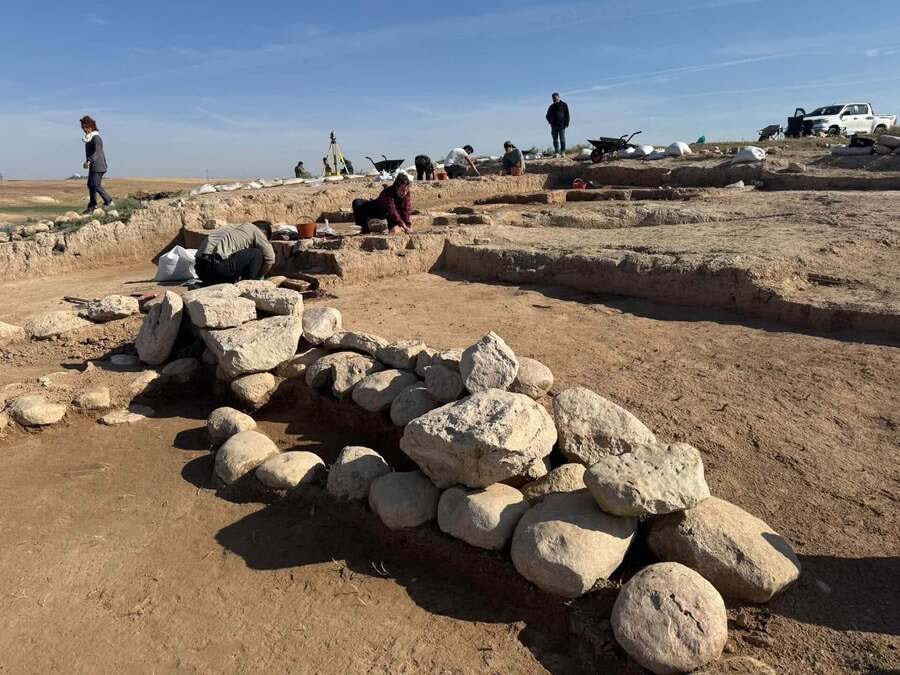
The General Directorate of Antiquities and Heritage of the Kurdistan Region, in cooperation with Italy’s University of Palermo, announced several new discoveries at the “Gire Gumbaz” archaeological site in Duhok, revealing five settlement layers from the transitional period between the Copper Age and the Early Bronze Age.
Today, Monday 26 of Tishreen al-Awwal 2026, the General Directorate of Antiquities and Heritage of the Kurdistan Region stated in a communiqué: During ongoing archaeological excavations at the “Gire Gumbaz” site, important new discoveries were made through coordination and cooperation between the Duhok Directorate of Antiquities and Heritage and Italy’s University of Palermo.
The communiqué stated: The Gumbaz site is one of the important archaeological sites in the Kurdistan Region. The latest discoveries have also shown that life at this site continued during the transitional phase between the Copper Age (the Late Chalcolithic) and the Early Bronze Age—that is, at the end of the fourth millennium BCE and the beginning of the third millennium BCE.
The General Directorate of Antiquities and Heritage also noted that the new findings revealed five settlement layers consisting of the remains of mud-brick buildings, storage areas, ovens, and some remains indicating the existence of craft activities during that period, such as a distinctive seal.