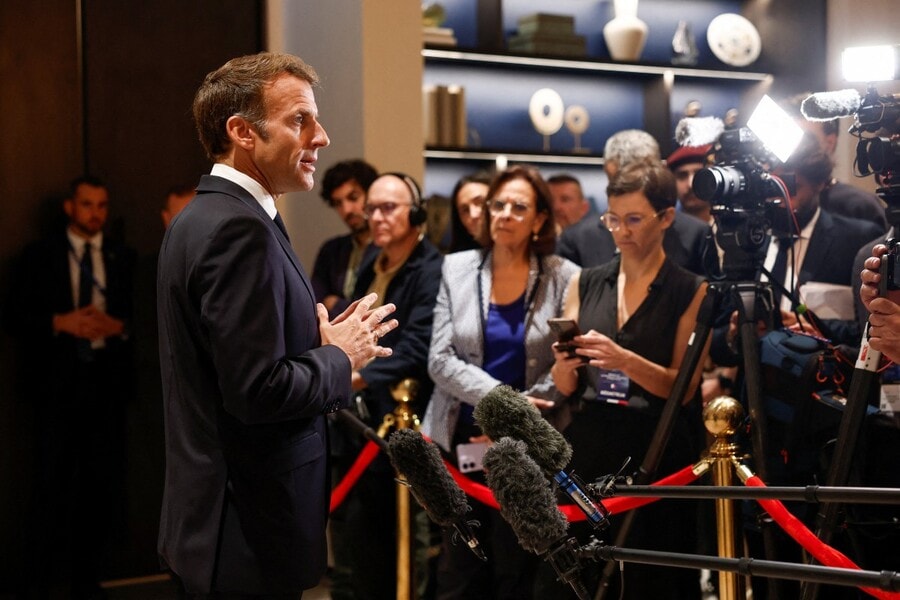
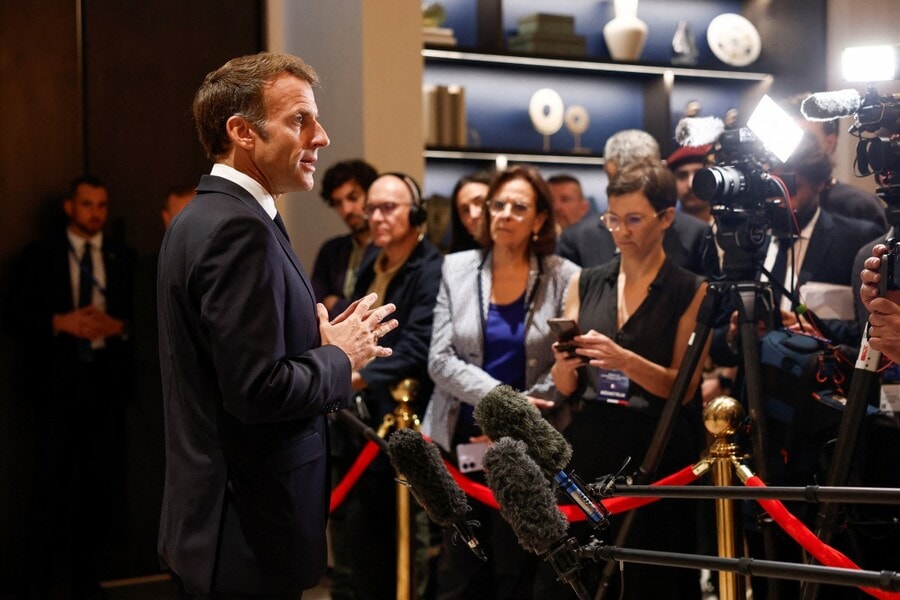
French President Emmanuel Macron admitted that his country’s authorities were in no way prepared to confront the widespread turmoil and unrest that shook France in 17 October, as the wave of protests has continued since mid-September.
During his visit to the city of Marseille, Macron stated: On 17 October, the necessary security forces were available neither in Marseille nor in the other cities, because we had not at all anticipated such a situation occurring.
According to figures from France’s Interior Ministry, the country’s largest demonstration since the protests began took place that day, with approximately 550 thousand people participating.
The protests later turned into violence, looting and unprecedented unrest; in several cities, masked groups clashed with police forces, causing damage to approximately 3 thousand shops and commercial establishments, while more than 1,000 police officers, gendarmes and firefighters were injured.
In response, security forces used tear gas, stun grenades and water to disperse the protesters and arrested hundreds of people; meanwhile, authorities imposed curfews in several major cities, including Paris, Lille, Lyon, Marseille and Nice.
This wave, regarded as one of the most intense periods of unrest in France in recent years, has confronted Macron with a deep crisis in the final months of his term. The protests initially began in mid-September among high-school students around Paris, calling for improved conditions in schools, but they were later joined by people protesting rising prices and quickly spread throughout France.